


Presenter: Dr. Tom Lewis OAM
Panel: Brigadier Corey Shillabeer (Commander, Fires Brigade); Brigadier Don Roach; industry representative, NIOA; facilitated by LTCOL Nick Floyd
Event: Firepower: Lessons from World War II seminar series — Royal Australian Artillery Historical Company
Seminar Overview
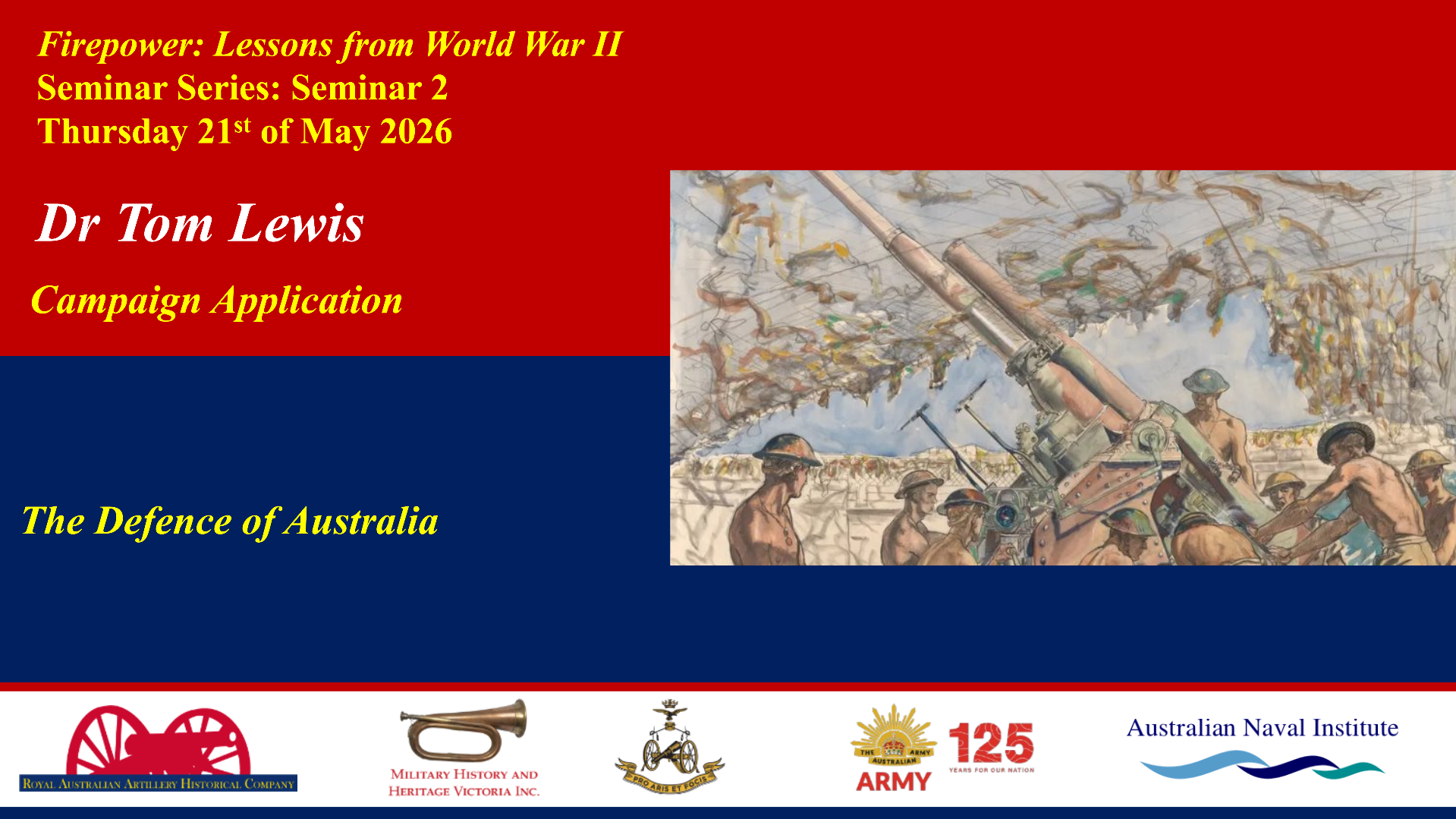
Military historian Dr Tom Lewis OAM argues that the attacks on Australia in the Second World War were not isolated raids but a sustained, multi-axis campaign that exposed catastrophic failures of command and control, integrated defence, and industrial sustainment. Presented as part of the Royal Australian Artillery Historical Company’s Firepower: Lessons from World War II seminar series, the presentation traces the campaign from German mine warfare that killed the first two Allied servicemen at Beachport, through the sinking of HMAS Sydney by the raider Kormoran with the loss of all 645 hands — the largest single combat loss in Royal Australian Navy history.
The presentation examines the attack on Darwin on 19 February 1942, when 188 Japanese carrier aircraft — Zeros, Kates, and Vals — struck the port while not one Australian fighter got airborne, and the subsequent air war over the Northern Territory against Betty bombers. Lewis details the attack on Broome, where nine Zero fighters killed 86 people, many of them refugees in flying boats, and the ad hoc command arrangements shared with the USAAF across northern Australia. The Japanese submarine campaign receives particular attention: I-122 mining the Torres Strait, and three midget submarines penetrating Sydney Harbour after reconnaissance had gone undetected for a week and a half, with Commodore Muirhead-Gould’s harbour defence failings culminating in the sinking of HMAS Kuttabul and 21 lives lost. The engagements at Fort Scratchley, the sinking of the hospital ship Centaur, and RAAF action against I-178 complete the picture.
The common thread, Lewis argues, is not enemy brilliance but Australian unpreparedness. Fused defence — integrated command and control, boom nets, radar, and Spitfires — eventually turned the north into a hard target, but only by war’s end. The lesson for a modern joint force is that layered defence must be built before the first attack, not after it.
Panel Discussion
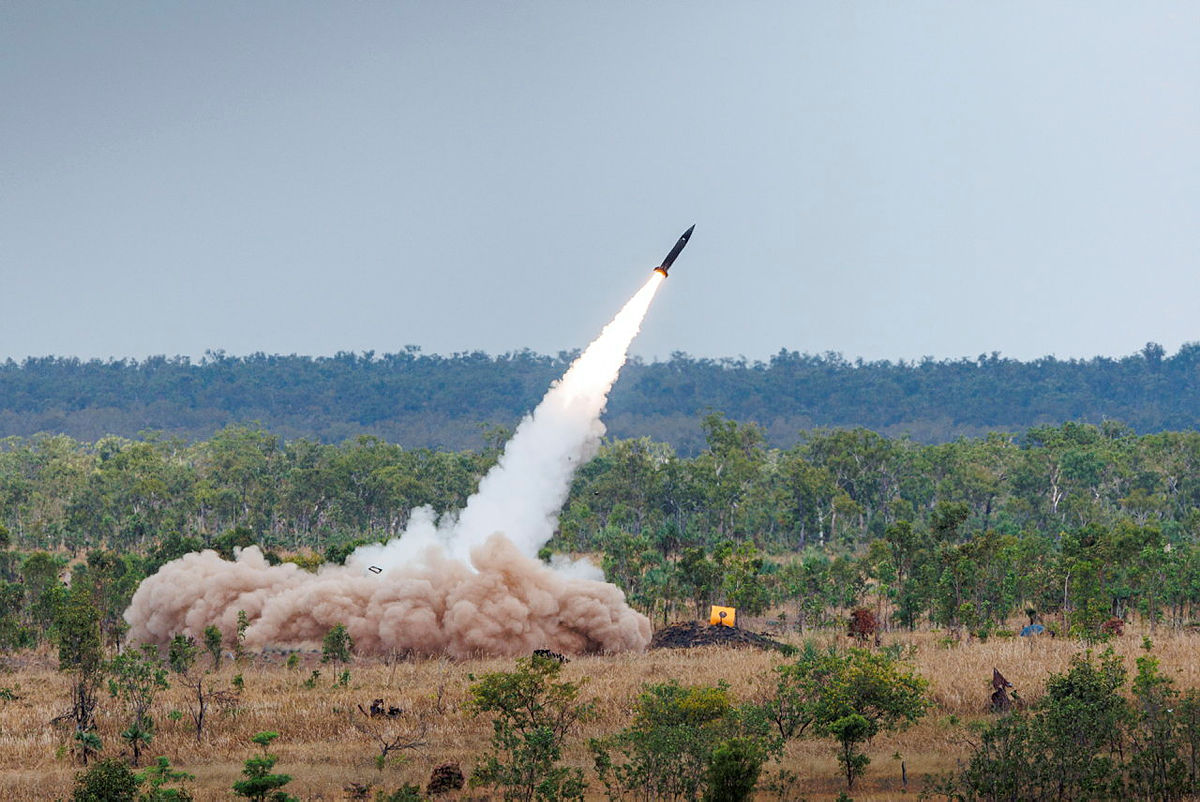
The accompanying panel discussion draws these lessons forward to today’s decision makers. Discussion points include Fort Nepean, authorities to engage, and decentralised execution as the historical roots of integrated command and control across coastal and air defence artillery, and the industrial sustainment demands of surge capacity, stockpiles, and lines of communication. The panel examines Australia’s strategic geography through HIMARS and long-range fires, the Multi-Domain Task Force and regional interoperability, and the Precision Strike Missile alongside uncrewed aerial systems and a mix of munitions. The tripartite relationship between industry, CASG, and the capability manager, and the National Defence Strategy’s self-reliance agenda — shadow factories and the national support base — frame the industrial discussion, while C4I, the RF spectrum, insensitive munitions, and the 20-40-40 philosophy of constant adaptation address the technical. The discussion closes on littoral manoeuvre and expeditionary advanced base operations, the Littoral Manoeuvre Group’s landing craft battalions, the CAMEL Common Autonomous Missile Launcher and trusted AI, and Aegis fleet defence within the laws of armed conflict — the modern answer to the layered defence Australia failed to build in 1942.